
Hardscape & Landscape Contractor in Langley
From Fort Langley heritage streets to the rapid new builds of Willoughby. ICPI certified installers who know the Township's DPAs and strata rules.
Hardscape Built for Langley's Two Very Different Halves
Langley is really two places operating under one name. The City of Langley is compact, urban, and bounded, while the Township of Langley is one of the largest municipalities in BC by area, encompassing an enormous patchwork of historic Fort Langley, rural Aldergrove acreages, suburban Walnut Grove, and the booming Willoughby townhouse and single family neighborhoods that now stretch along the 200th Street corridor. A contractor who approaches every Langley project the same way will fail in at least one of these zones. We adapt what we build to where you live.
Willoughby is where most of our Langley project volume happens today. The neighborhood has been under constant construction for a decade, with new strata townhouse complexes and single family developments popping up from 72nd Avenue to 80th Avenue. These lots are small, the soil is disturbed fill left by the developer, and the strata bylaws are strict about fence height, paver color, and what you can do in the front yard. We start every Willoughby project by reading your strata's building guidelines. No exceptions. Resolving a fight with a strata after a wall is built is far more expensive than getting approval first.
Fort Langley is a completely different world. It is a heritage conservation area with design guidelines covering everything from paver pattern to fence material to plant selection, all intended to preserve the 19th century character of the village. We have worked inside the Fort Langley overlay enough times to know which materials will sail through the heritage review and which will trigger a six week revision cycle. The soil here is better than most of Langley (silty loam over gravel, generally well drained) but the bylaws are the slow part of the project, not the ground.
Finally, there are the rural Langley acreages, including Otter District, Murrayville, Campbell Valley, South Langley, and Brookswood. These are larger lots with older drainage systems, septic fields that constrain where you can dig, and often equestrian or agricultural uses that affect load requirements. A gate driveway that has to support a horse trailer and a farm truck needs a completely different base than a suburban driveway in Walnut Grove. We design for the actual use, not a generic residential spec.
Our Services in Langley
Retaining Wall Construction in Langley
Learn MorePaver Patio Installation in Langley
Learn MoreDriveways & Walkways in Langley
Learn MoreOutdoor Kitchen Design & Build in Langley
Learn MoreSteps & Staircases in Langley
Learn MoreConcrete Work in Langley
Learn MoreLandscape Design & Installation in Langley
Learn MoreArtificial Turf Installation in Langley
Learn MoreDrainage Solutions in Langley
Learn MoreOutdoor Lighting in Langley
Learn MoreFencing in Langley
Learn MoreSod & Turf Installation in Langley
Learn MoreTree & Shrub Planting in Langley
Learn MoreIrrigation Systems in Langley
Learn MoreFire Pits & Fireplaces in Langley
Learn MorePergolas, Gazebos & Covered Structures in Langley
Learn MoreWater Features in Langley
Learn MoreExcavation & Grading in Langley
Learn MoreErosion Control & Slope Stabilization in Langley
Learn MorePool Deck Installation in Langley
Learn MoreTrueform Works Across All of Langley
Why Langley Is Different
Climate
Langley receives approximately 1,550 mm of annual rainfall, with the northern half (Walnut Grove, Willoughby) slightly drier than the southern acreages. Winter freeze thaw is mild but drains are still critical because of the volume of water. Willoughby and Walnut Grove also sit slightly lower than Abbotsford, so standing water is more common on poorly graded lots.
Soil Conditions
Fort Langley and the Otter District sit on silty loam over gravel, which is relatively well drained and forgiving. Willoughby and Walnut Grove are mostly disturbed fill from recent development, which varies lot to lot and requires on site assessment before base design. Brookswood is sandy loam that drains well but requires edge containment to prevent paver creep.
Permits & Bylaws
The Township of Langley requires building permits for retaining walls over 1.2 metres in height. Fort Langley has an additional Heritage Conservation Area overlay that controls materials, colors, and visual character, so plan on an extra 2 to 3 weeks for heritage review. Willoughby and other newer neighborhoods almost always have strata or DPA guidelines; we verify these before quoting.
Trueform Tips
In Willoughby and Walnut Grove, confirm your strata or DPA guidelines before you pick materials, because it can save thousands on rework. In Fort Langley, plan around the heritage review calendar rather than the weather. On rural acreages, talk to us about septic field locations and agricultural load requirements before we quote the base depth.
Willoughby Townhouse Patio & Fire Pit
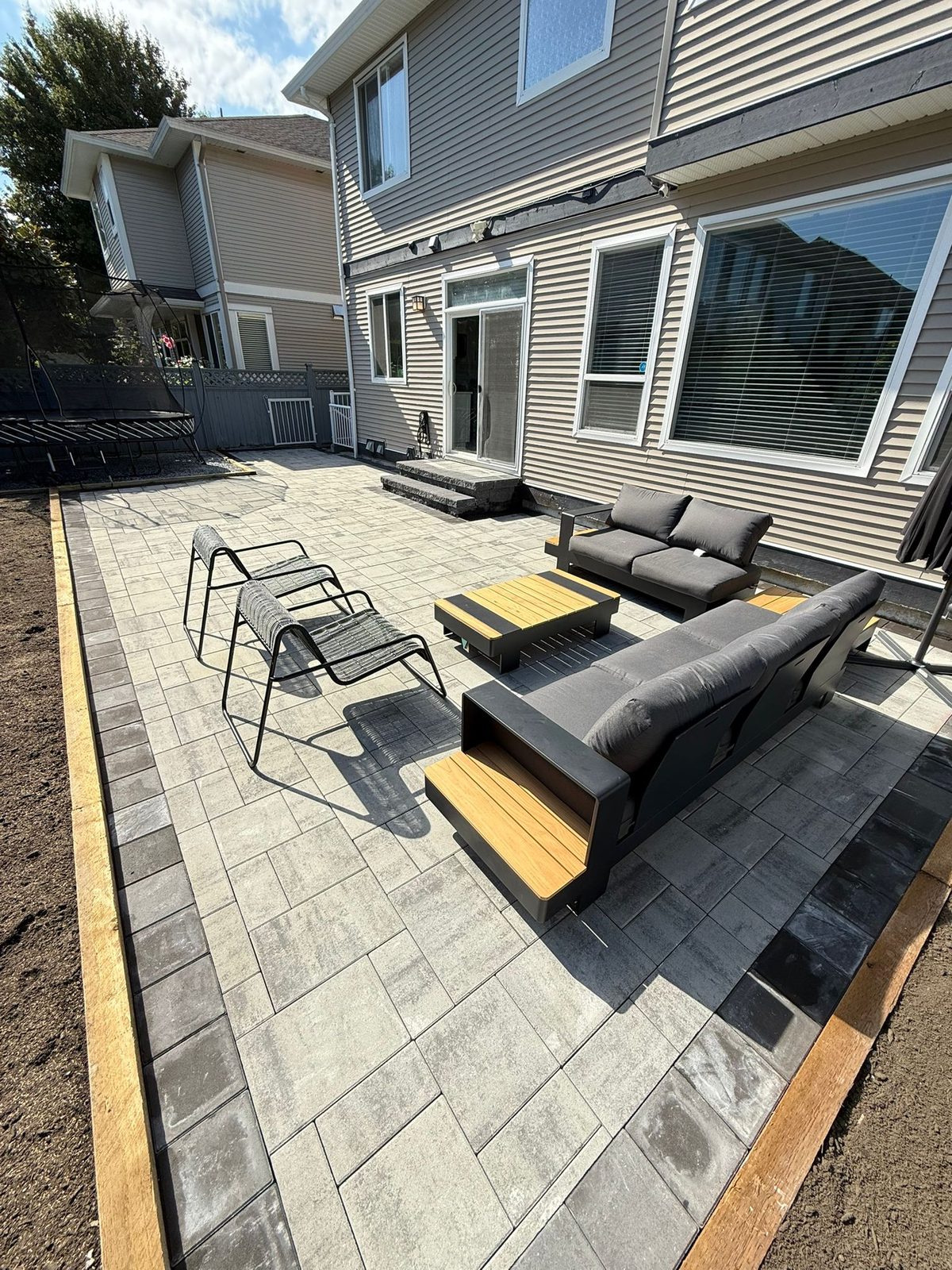
A small strata townhouse lot in Willoughby with a steep grade drop to the back fence. We designed a 28 square metre Techo-Bloc paver patio with an integrated gas fire pit, 600mm Allan Block seat wall, and low voltage LED lighting along the wall capstones. The strata approved color palette (Shale Grey and Onyx) kept the project within the community's design guidelines, and a subtle 2 percent grade handles Willoughby's winter rain.
See More Langley ProjectsLangley Project FAQs
Yes, and we consider it the first step of any Willoughby project. We request your strata's building guidelines before quoting, verify allowed materials and colors, submit preliminary drawings to the strata council when required, and adjust the design to fit the community's rules. This front loaded work saves our clients from expensive rework later.
Yes. We have completed multiple projects inside the Fort Langley Heritage Conservation Area. We know which paver styles, natural stones, fence designs, and plant palettes will pass heritage review without revision, and we build the extra review time into our schedule so the project is not delayed. We handle all heritage permit applications as part of the project.
Paver patio costs in Langley typically range from $25 to $55 per square foot installed. A standard 300 square foot patio is approximately $9,000 to $16,000, while larger patios with retaining walls, fire features, or premium Techo-Bloc and Unilock products can exceed $25,000. Willoughby townhouse projects often come in at the lower end due to smaller scope. We provide detailed line item estimates after a free on site visit.
Yes. We regularly work in the Otter District, Campbell Valley, Murrayville, and South Langley acreages. Rural projects often involve larger scale site work (driveway regrades, horse paddock drainage, equipment access paths) and we design for the actual equipment loads your property will carry. Septic field mapping is always part of our preconstruction review.
A standard paver patio takes 3 to 5 working days. A retaining wall or driveway can take 5 to 10 days depending on size and base preparation. Larger projects combining walls, patio, lighting, and drainage typically span 2 to 4 weeks. Heritage Conservation Area projects in Fort Langley should assume an additional 2 to 3 weeks of review time before construction starts.
The Township of Langley requires a building permit for retaining walls over 1.2 metres (4 feet) in height. Walls retaining a surcharge, such as a driveway above, pool deck, or structure, require engineering regardless of height. The City of Langley has similar rules. We confirm all permit requirements during the free on site consultation and submit applications on your behalf.
We Also Serve
Ready to Build in Langley?
Tell us about your Langley project and receive a detailed, no obligation estimate. Free on site consultation across every Langley neighborhood.